
Cooking Dash
GluCasual
4.038.91K Reviews
- Version
- 2.28.1
- Installs
- 10.00M
- Age Rating
- Everyone
Screenshots

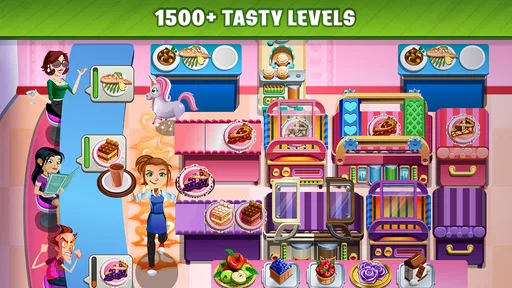
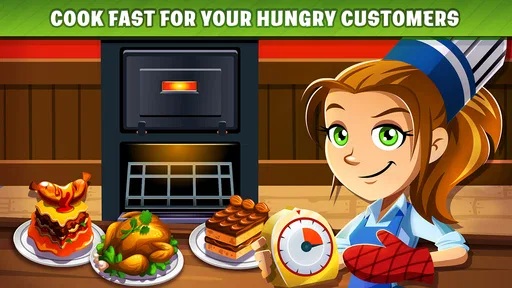

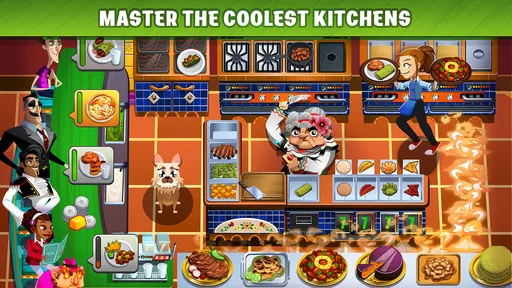


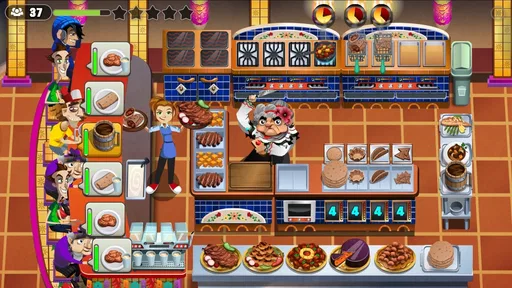
Our Review of Cooking Dash
 Analysis by Appyee
Cooking Dash is the kind of casual game I reach for when I want a quick burst of activity rather than a long, complicated adventure. It puts me behind a busy restaurant counter, where the challenge is not simply preparing food but keeping several customers moving through the service without letting the whole operation fall apart. That simple idea gives it an immediately readable style: tap, react, prioritize, and try to stay ahead of the next request.
I found the appeal strongest in short sessions. A spare moment can turn into a few rounds, and the controls are easy enough to understand without studying a tutorial for a long time. At the same time, the later pressure comes from choosing what deserves attention first, not from memorizing a large control scheme. This is a fast food-service puzzle disguised as a light time-management game, and that distinction matters when deciding whether it suits you.
How the current version feels to play
Glu presents Cooking Dash as a free casual game, and that description fits the experience well. Its central loop is built around serving customers efficiently, handling a growing stream of tasks, and improving your performance through better timing. I never felt that I needed to understand a complicated story before enjoying it; the restaurant activity is the main attraction from the first session.
The best moments come when several actions overlap. One customer may need attention immediately while another order is nearly ready, and a third task may be waiting for a final step. The game turns those small decisions into its main source of tension. I like that the challenge is readable on a phone screen, yet still leaves room for mistakes caused by rushing.
That makes it a useful choice for people who enjoy casual time-management games but do not want a traditional strategy title. You can play with a relaxed attitude during easier moments, then become much more deliberate when the service flow gets demanding. It is also approachable for players who prefer direct touch interaction over virtual movement controls or complex menus.
A practical way to approach each session
My most useful habit was to stop treating every customer as an isolated order. Instead, I watched the whole counter and tried to group actions mentally: finish what is almost ready, start the next necessary step, then return to the customer whose patience mattered most. This sounds obvious, but the game becomes noticeably smoother once I stopped tapping randomly at whatever looked most visible.
Another helpful approach is to use early, less stressful rounds as practice for recognizing the rhythm of the kitchen. I paid attention to which actions could be prepared before they became urgent and which interruptions caused the biggest chain of delays. That knowledge carries more value than simply reacting faster, because a good sequence prevents several problems at once.
For a realistic everyday example, imagine playing while waiting for a train or taking a short break between errands. I could complete a small amount of progress without committing to a long story chapter or remembering a large map. If I had only a few minutes, the game still made sense; if I had longer, I could continue working on better service runs. That flexibility is one of its clearest strengths.
What the developer’s long-running release suggests
Cooking Dash was released on June 16, 2015, and the current version is 2.28.1. Those details place it in a mature stage rather than the early experimental period of a new mobile game. In my view, that helps explain why the basic presentation feels focused: the central restaurant loop is established, familiar, and designed for repeat play rather than a single short campaign.
The age of the game also changes how I judge it. I do not expect it to behave like a brand-new casual release chasing the latest visual trend. Instead, I look for whether the service loop remains comfortable on a modern phone and whether the progression gives me enough reason to return. The current version is the one I would evaluate today, while the original release date provides useful context for understanding its established identity.
Its broad reach is also clear from its audience: the game has passed ten million installs, while its average rating sits at four stars from roughly 459,000 ratings. I would not treat those figures as proof that every player will enjoy it, but they do show that the format has remained accessible to a large mobile audience.
Where it differs from simpler alternatives
Compared with an idle restaurant game, Cooking Dash asks me to remain involved. I cannot simply wait for resources to accumulate and return later to collect them. The fun depends on active decisions, especially when multiple demands arrive close together. That makes it more satisfying for anyone who wants their taps to matter, but less suitable for someone looking for a mostly hands-off experience.
It also differs from a traditional cooking simulator. I am not approaching it as a realistic lesson in recipes, kitchen safety, or professional food preparation. The emphasis is on speed, sequence, and customer flow. Someone who wants detailed ingredient experimentation would probably be happier with a recipe-focused or simulation-heavy alternative. Cooking Dash is better understood as an arcade-like service challenge with a food theme.
Against a match-three game, the tension is more continuous. A puzzle board usually gives me time to inspect possible moves, while this game encourages me to manage several immediate responsibilities. I prefer Cooking Dash when I want a stronger feeling of urgency, but I would choose a slower puzzle game when I am tired or want a calmer mental break.
What existing players may notice over time
For returning players, the current version is best approached as a continuation of a familiar formula rather than a complete reinvention. The important question is whether the established loop still feels rewarding after repeated sessions. In my experience, it does when I focus on improving decisions instead of merely repeating the same motions.
That improvement can be quite personal. One player may enjoy trying to maintain a clean, uninterrupted service flow. Another may care more about reaching a difficult section or replaying a stage with fewer errors. I appreciated that the same round could feel different depending on whether I played cautiously or chased a faster result.
There is a trade-off, though. Familiarity can become repetition if I am not interested in refining performance. The game’s appeal comes from the service routine and the pressure around it, so anyone who needs constant new mechanics may eventually find the structure predictable. I would recommend it more confidently to players who enjoy mastering a loop than to players who quickly tire of repeated task patterns.
Free to start, but not friction-free
The game is free to download and rated for Everyone, which makes it easy to try without a financial commitment at the beginning. That is useful for families and casual players who want to test the basic experience before deciding whether it deserves regular space on the phone. The simple premise also makes it approachable for younger players, although adults may still need to supervise purchasing decisions.
Cooking Dash includes in-app purchases ranging from $0.99 to $99.99 per item. I consider that the most important practical caution for new players. A free entry point does not mean every optional purchase is equally small, and the upper end of that range is substantial. I would approach the game with a clear personal rule: enjoy the ordinary progression first, and do not buy anything simply because a difficult service run creates pressure.
That advice is especially relevant for children using a shared device. The Everyone rating describes the content, not the household’s preferred spending setup. Before handing the phone over, I would make sure purchase controls match the family’s expectations. For adults, the same principle applies in a different way: decide in advance whether you are willing to spend, rather than making a rushed choice during a frustrating moment.
The game is developed by Glu, and its mature release history gives it the feel of a product that has had time to settle into its niche. Still, an established game is not automatically the right fit for every player. If you dislike purchase prompts in free-to-play games, even a well-designed service loop may not outweigh that irritation.
Small decisions that make the game easier to enjoy
First, I recommend playing with a goal for the session. Instead of opening the game and tapping until I lose interest, I might focus on cleaner sequencing, learning a troublesome service pattern, or simply completing a short run without rushing. A small goal turns repetition into practice and makes progress easier to notice.
Second, I found it useful to separate mistakes caused by speed from mistakes caused by poor planning. If I tapped too quickly, slowing down helped. If I repeatedly ignored a waiting customer while preparing something less urgent, the solution was not faster tapping but better prioritization. Recognizing that difference prevents the game from feeling unfair when the real issue is my decision order.
Third, I would avoid judging a session only by its final result. A failed run can reveal which part of the service chain breaks first. Maybe I start too many actions at once, or perhaps I leave a nearly finished order unattended while chasing a new request. Treating each failure as information makes the game more satisfying and reduces the temptation to spend just to bypass discomfort.
Finally, I would play it in the setting it suits best. It works well during short waits, casual breaks, and relaxed evenings when I want something interactive but not emotionally heavy. It is less appealing when I need quiet concentration for another task, because the constant attention can pull me in more than a passive app would.
Who should choose it, and who should skip it
I think Cooking Dash is a good match for players who enjoy quick rounds, visible task priorities, and the satisfaction of improving a routine. It is particularly suitable if you like food-themed games but want more active decision-making than an idle title provides. Newcomers to time-management games can understand the premise quickly, while experienced players can focus on smoother execution.
I would be more cautious recommending it to anyone who wants a deep cooking system, a long narrative adventure, or a completely relaxed experience. It also may not suit players who strongly dislike urgency, repeated service patterns, or free-to-play purchase options. In those cases, a slower puzzle game, a premium offline title, or a more detailed cooking simulator could be a better choice.
The minimum operating system is Android 7.0, so owners of very old Android devices should check compatibility before planning around it. For supported phones, the more important question is personal tolerance: do you want to manage a busy food counter with quick decisions, or would you rather play something that lets you pause and think without pressure?
What I would watch in future use
Because the current version is 2.28.1, I would watch how future updates affect the balance between active play and optional spending. The strongest version of this game is the one that keeps the restaurant decisions meaningful, so any change that makes progress feel overly dependent on purchases would matter to me more than a cosmetic adjustment.
I would also pay attention to whether the established loop continues to feel welcoming to new players while giving returning players a reason to improve. That balance is difficult in a mature casual game. Beginners need clear, manageable steps, while experienced players need enough variation or challenge to avoid feeling that every session is identical.
Most importantly, I would judge updates by their effect on moment-to-moment control. The heart of Cooking Dash is the relationship between customer demands, preparation order, and timing. If that interaction remains readable and satisfying, the game has a solid reason to stay installed. If it becomes cluttered or excessively interrupted, its simple strengths would be harder to appreciate.
My recommendation after spending time with it
I recommend Cooking Dash to anyone who wants a free casual game built around active restaurant management rather than passive waiting. Its greatest strength is the way ordinary service tasks become a compact test of attention and prioritization. I could pick it up quickly, understand what went wrong in a poor round, and try again with a better plan.
My recommendation comes with two clear conditions. First, you should enjoy repetition with gradual improvement, because the game’s satisfaction comes from refining the service routine. Second, you should be comfortable ignoring or carefully controlling in-app purchases, which can cost from $0.99 to $99.99 per item. If those conditions are acceptable, the game offers an approachable way to fill short breaks with something more engaging than an idle timer.
For me, it works best as a focused little challenge: open it when I want quick decisions, play with a specific improvement in mind, and stop before the pressure becomes tiring. It is not a substitute for a full cooking simulator or a deep strategy game, but it does not need to be. Within its casual restaurant niche, it remains an easy game to try and a surprisingly demanding one to master.
Verdict
Strengths of Cooking Dash
- Fast-paced levels make short play sessions entertaining.
- Bright cartoon graphics give the game a cheerful, polished look.
- Multiple restaurant settings keep the presentation feeling varied.
- Simple controls are accessible for younger and casual players.
- Unlockable upgrades provide goals beyond merely completing levels.
Limitations of Cooking Dash
- Later stages can feel repetitive once the core serving routine is familiar.
- Frequent customer queues may become stressful rather than relaxing.
- Some upgrades and progress options can feel tied to in-app purchases.
- The game may require a stable connection for certain features.
- Small mistakes can quickly ruin a level, which may frustrate new players.
Other Releases by Glu
View All
Diner DASH Adventures
Casual3.8
Similar Picks in This Category
View All
My Talking Angela
Outfit7 Limited4.2

My Talking Tom
Outfit7 Limited4.3

Pou
Zakeh4.2

My Talking Tom 2: Pet Game
Outfit7 Limited4.3

Candy Crush Saga
King4.6

Bridge Race
Supersonic Studios LTD4.1
Frequently Asked Questions
What is Cooking Dash, and how does the gameplay work?
Cooking Dash is a fast-paced time-management game in which you help a character prepare and serve meals in busy restaurants. You must take customer orders, cook or assemble dishes, serve them quickly, and collect payments before guests become impatient. Each level introduces different recipes, layouts, and challenges, making speed, organization, and smart use of upgrades important for success.
Is Cooking Dash free to download and play?
Cooking Dash can generally be downloaded for free on supported Android and iOS devices, but the game may include optional in-app purchases. These purchases can provide premium currency, boosters, extra lives, or other conveniences. You can usually progress without spending money, although waiting periods, limited resources, and difficult levels may encourage purchases. Check the store listing for the current pricing and availability.
Does Cooking Dash require an internet connection?
Some parts of Cooking Dash may work without a constant internet connection, especially basic gameplay that has already been downloaded. However, an internet connection may be required for advertisements, cloud saves, events, updates, purchases, and certain online features. Availability can vary by version and device, so it is best to launch the game offline before traveling if you want to confirm which features remain accessible.
Are there advertisements and in-app purchases in Cooking Dash?
Yes, Cooking Dash may contain advertisements and optional in-app purchases. Ads can sometimes be used to receive rewards or continue playing, while purchases may offer premium currency, boosters, or faster progress. The game is playable without buying anything, but resource limits and challenging stages can make optional spending tempting. Parents should review purchase settings before allowing children to play.
What devices are compatible with Cooking Dash, and is it suitable for children?
Cooking Dash is designed for mobile devices running supported versions of Android or iOS, although exact compatibility depends on the current store listing and your device hardware. It is generally easy to understand and suitable for casual players, including children, but younger users may need supervision because of advertisements, optional purchases, and potentially fast-paced levels that encourage repeated play.
Play our best games!


